Christmas tree shopping starts earlier every year, and by late October most choose-and-cut farms already have their 2026 opening dates posted. Before heading out, it helps to know what actually separates a good tree-buying trip from a frustrating one — and that starts with deciding what kind of tree, and what kind of outing, you're actually after.
Real vs. Fake: What You're Actually Choosing
A live tree and an artificial one solve different problems, and neither is simply "better." A real tree brings actual scent, a fuller and less uniform shape, and — for choose-and-cut farms — an outing that's part of the purchase. It also means a yearly errand, a trunk that needs a fresh cut and daily water, and a tree to dispose of or recycle afterward. An artificial tree is a one-time purchase that goes back in a box every January, with no needles to vacuum and no watering schedule, but no scent either, and eventually a trip to a landfill when it wears out.
Real tree
Artificial tree
Scent
Yes — pine, fir or spruce
None
Shape
Natural, varies tree to tree
Uniform, pre-shaped
Ongoing care
Daily water, fresh-cut base
None
Annual cost
A new purchase each year — check current rates at the farm or lot
One upfront cost, reused for years
End of season
Curbside recycling or farm drop-off, where offered
Stored in a box
The outing
Can include a farm visit, cutting your own, hayrides where offered
None
Neither column is a knock on the other — it's really a question of whether the farm visit and the scent are worth the extra handling, and that's a household decision, not a directory's to make. Households with allergies to tree sap or mold spores sometimes lean artificial for that reason alone, while households that treat the tree-buying trip itself as a holiday tradition tend to stick with real trees even once kids are grown and the errand could easily be skipped.
Choose-and-Cut Farms vs. Pre-Cut Lots
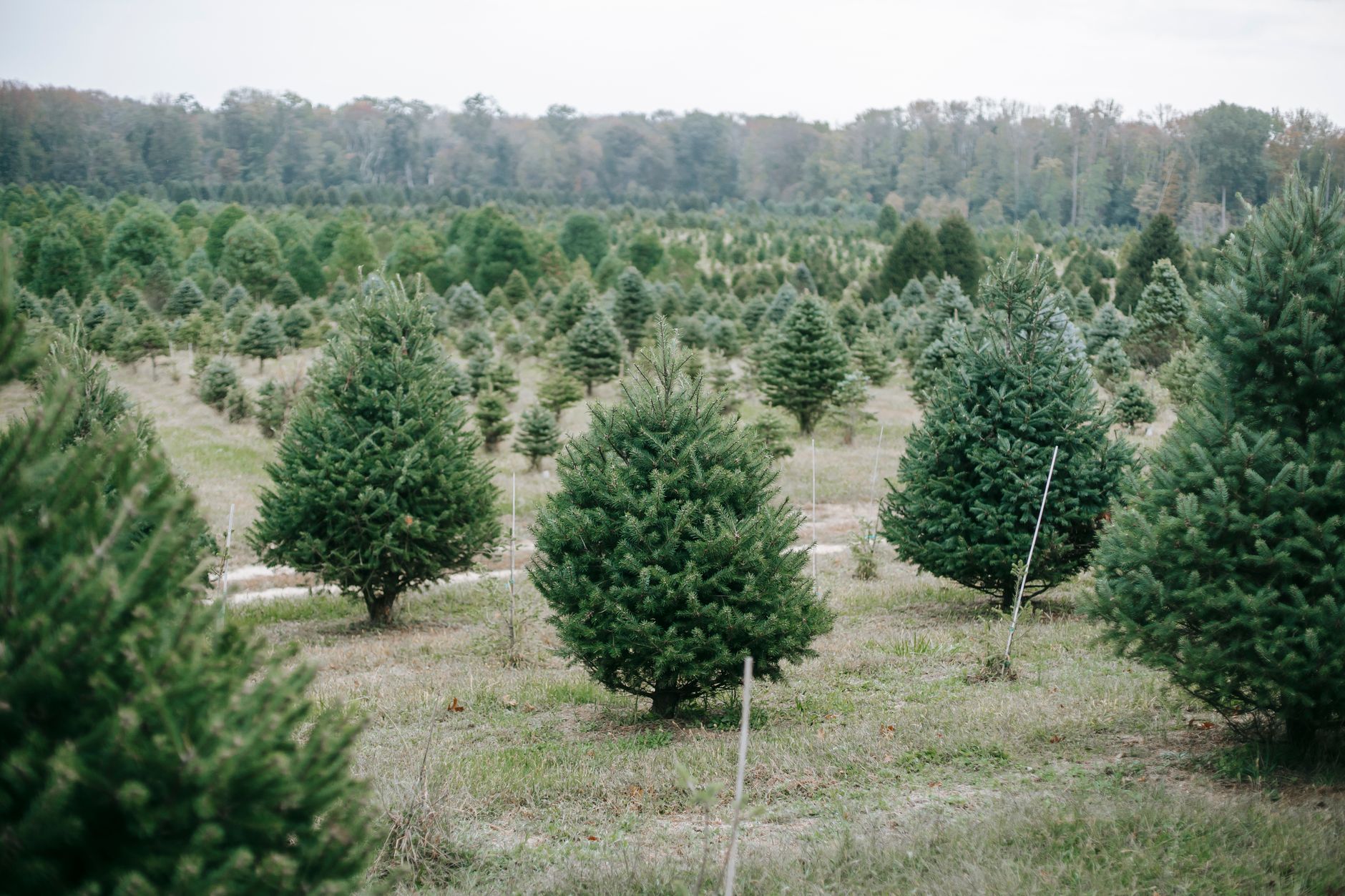
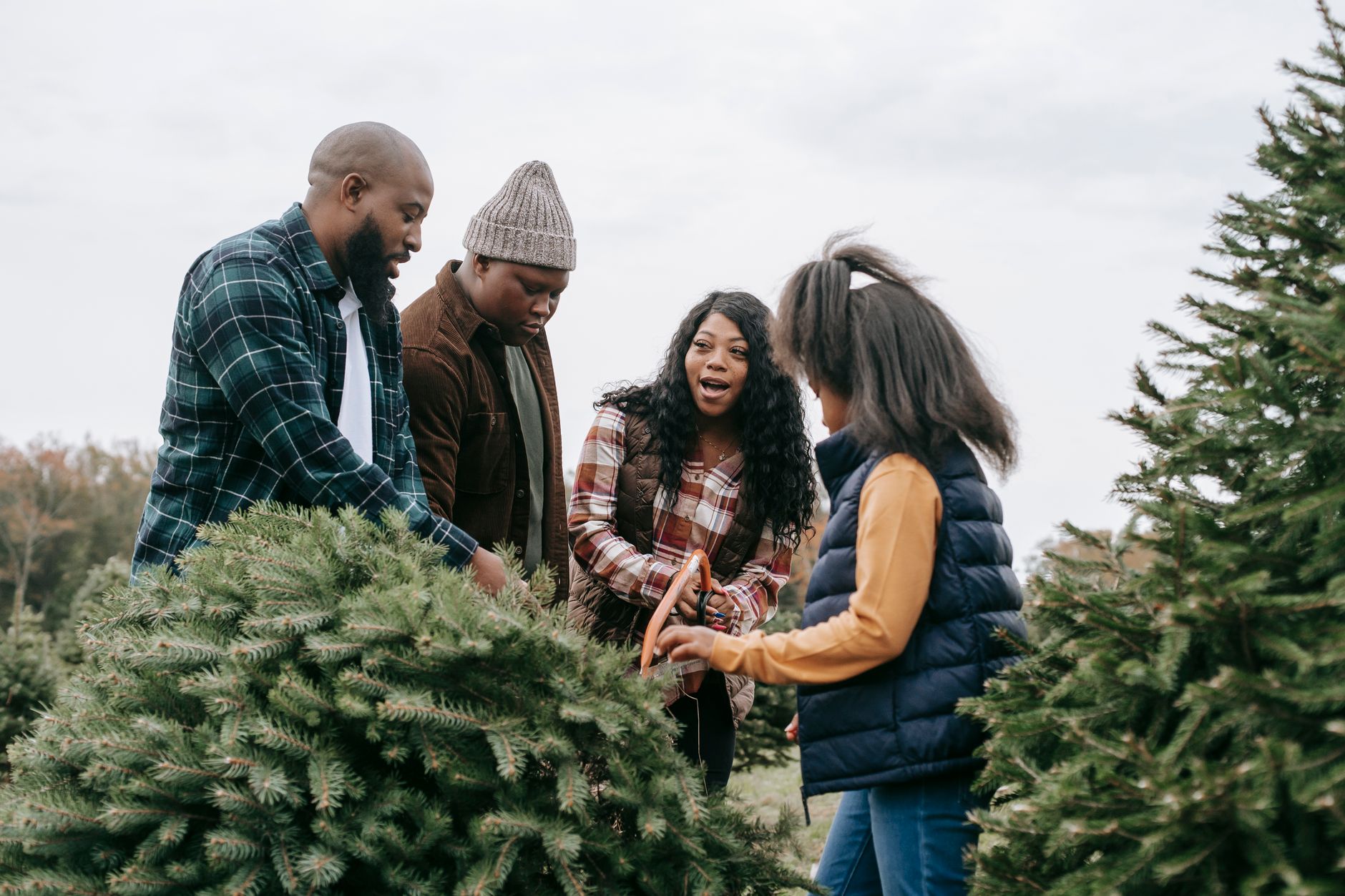
Once you've decided on a real tree, the next choice is where it comes from. A choose-and-cut farm lets you walk the rows, pick a living tree, and cut it yourself or have staff cut it on the spot — the tree is as fresh as it gets, and for many families the walk through the field is the point. {{biz:wells-christmas-tree-farm-norman}} in Norman, Oklahoma, is built around exactly that kind of visit: choose-and-cut trees alongside a Christmas Market, movie nights and other farm events, plus a coffee shop and gift shop that stay open beyond the tree season. {{biz:b-and-j-evergreen-christmas-trees-clear-lake}} near Clear Lake, Minnesota, has grown trees on the same land since 1956 and lists its 2026 season opening November 21, with a petting zoo among the extras listed on the farm's own site.
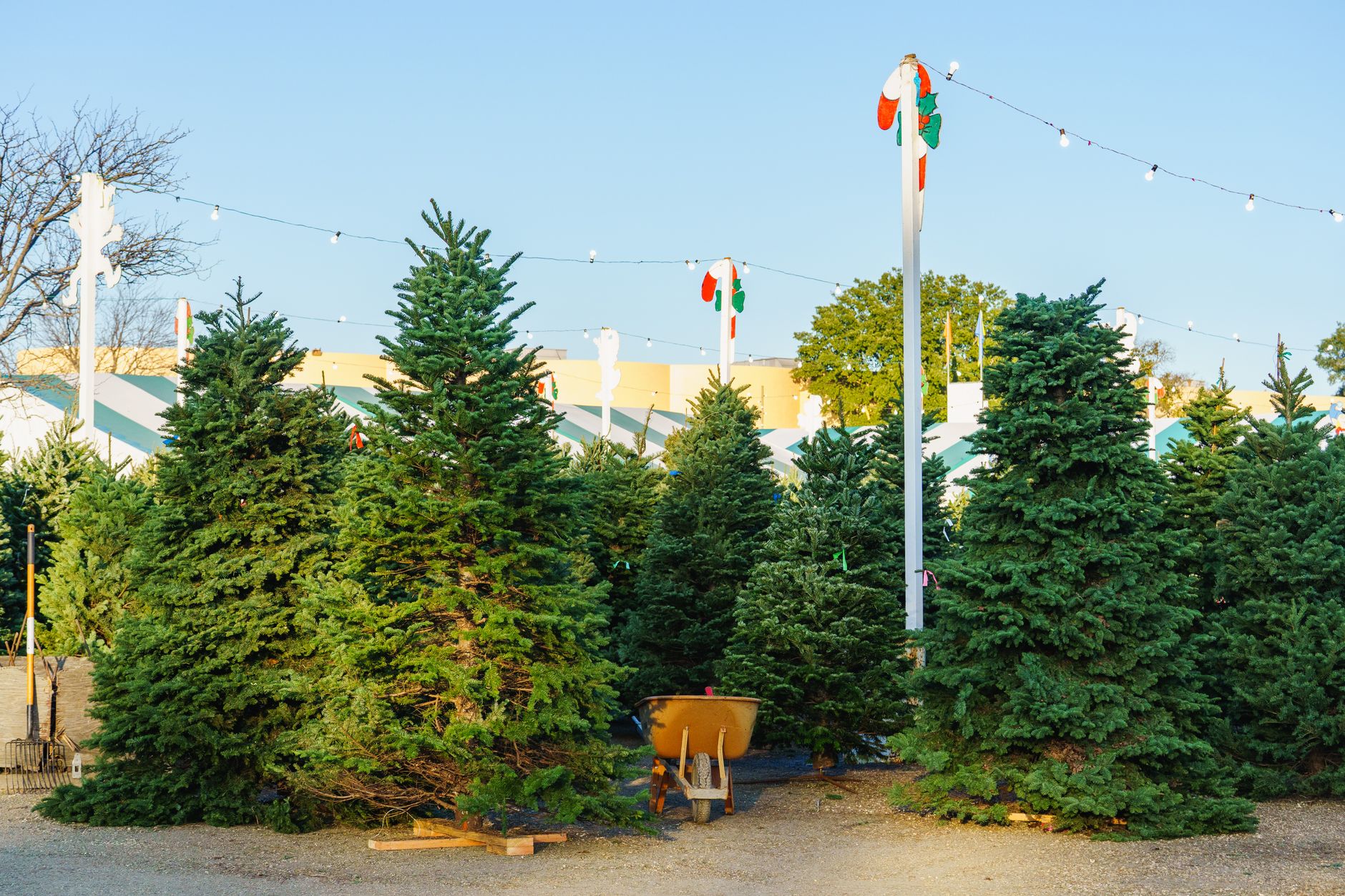
A pre-cut lot, by contrast, is built for speed: trees are harvested ahead of the season and trucked to a lot or a retail location, so there's no field to walk and no saw involved — you're picking from trees already cut, often in a range of sizes. {{biz:boston-christmas-trees-brighton}} in Brighton, Massachusetts, sells Balsam and Fraser firs this way, along with wreaths, garland and stands, and gives every tree a fresh cut and tie-down before it leaves. {{biz:hickory-creek-farm-greensboro}}, a fourth-generation farm in Greensboro, North Carolina, actually offers both: it's a choose-and-cut operation that also keeps pre-cut, field-grown trees on hand for anyone who wants the tree without the walk.
Whether you're cutting your own or choosing from a lot, a few quick checks tell you how fresh a tree actually is. Run a branch gently through your hand — needles should bend and hold, not snap off or shower down. Bounce the trunk lightly on the ground; a heavy scattering of green needles is a sign the tree has already dried out, even if it looks full from a distance. Check the trunk's cut end, which should look pale and slightly sticky with sap rather than dark and dried; if a lot allows it, ask staff to make a fresh cut before you take the tree home, since a day or more of exposure to air can seal the base and block water uptake. A healthy tree also has some give to its branches rather than a stiff, brittle feel.
Picking the Right Species for Your Space
Farms and lots typically carry a handful of common species, and each has a slightly different shape, needle type and scent. Fraser fir holds its needles especially well and has stiff branches that support heavier ornaments. Balsam fir is known for the strongest classic pine scent and a narrower, more traditional silhouette. Douglas fir has soft, dense needles and a fuller, rounder shape. Noble fir has sturdy branches spaced widely enough to show off ornaments individually rather than as a dense mass. None of these is objectively better — it comes down to how much weight your ornaments need the branches to hold, how strong a scent you want in the room, and which silhouette fits your space.
Measuring Before You Buy
The single most common Christmas tree mistake is skipping the tape measure. Measure your ceiling height where the tree will stand and subtract a few inches for the stand and the topper. Measure the width of the space, including how far branches can spread without blocking a doorway or walkway. If the tree has to travel through a doorway to reach its spot, measure that too — a tree that looks reasonable in a field can be surprisingly wide once the branches relax indoors. At a choose-and-cut farm, it's easy to misjudge scale among dozens of similar trees, so bringing actual numbers rather than guessing by eye saves a second trip.
What Choose-and-Cut Farms Usually Offer Beyond the Tree
Many choose-and-cut operations build the whole visit into a seasonal outing rather than a quick errand. Based on what farms list for their own properties, that can include a Christmas market, photo opportunities, a petting zoo, hayrides, or a coffee and gift shop that stays open through the season — {{biz:wells-christmas-tree-farm-norman}} and {{biz:b-and-j-evergreen-christmas-trees-clear-lake}} both describe extras along these lines on their own listings. These add-ons vary a lot by farm and by year, so it's worth checking a specific farm's own website or calling ahead before planning a trip around a particular activity, rather than assuming every choose-and-cut farm offers the same extras.
Setting It Up and Keeping It Fresh
A fresh cut only helps if the tree goes into water quickly — sap can seal the cut end within a few hours, so get the tree into a stand with water the same day if possible. Keep the stand topped off; a tree can take up a surprising amount of water in its first days indoors. Position the tree away from radiators, wood stoves, and direct sunlight through a window, since heat sources dry out needles faster and raise fire risk. Checking the water level daily for the first week, then every couple of days after, keeps most trees fresh through the holidays without much extra effort.
Once the holidays are over, many towns offer curbside tree pickup for composting or mulching in the first couple of weeks of January, and some farms and lots also accept trees back for recycling — it's worth asking when you buy whether that option exists in your area, since pickup schedules and drop-off programs vary by city rather than being guaranteed everywhere.
When Farms Open and What to Expect This Season
Opening dates vary farm by farm, and several post them well ahead of the season. {{biz:b-and-j-evergreen-christmas-trees-clear-lake}} lists a November 21 opening for its 2026 season, and {{biz:hickory-creek-farm-greensboro}} traditionally opens the Saturday before Thanksgiving. Both patterns are common across choose-and-cut farms generally — many open the week of Thanksgiving and run through mid-to-late December, though exact dates, hours and any weather closures are best confirmed directly with each farm since they can shift from year to year.
If a live, potted tree you can plant afterward sounds better than a cut one, that's a different category entirely — look for a local tree or shrub nursery rather than a Christmas tree farm, since nurseries are more likely to carry living balled or container-grown evergreens suited to replanting after the season.
The Takeaway
There's no universally "right" tree — a choose-and-cut farm suits a family that wants the outing and doesn't mind a saw and a wagon ride back to the car, while a pre-cut lot suits anyone who wants a fresh tree without the field walk. Whichever route you take, the freshness checks (bendable needles, sticky sap at the cut, minimal needle drop when bounced), an accurate measurement of your space, and getting the tree into water quickly matter more to how long it lasts than which farm or lot it came from. Check each location's own site or call ahead for 2026 hours and pricing before making the trip, since both can shift from the dates and figures of past seasons.